American Polarizers

  • Home
  • Company Profile
  • Links
  • News
  • Contact Us
  • Linear Polarizers, Circular Polarizers & Wave Retarders
    • Visible Light Linear Polarizers
    • Visible Light Circular Polarizers
    • Near IR (Infrared) Linear Polarizers
    • UV (Ultra Violet) Linear Polarizers
    • Quarter Wave Retarders
  • Glare-Bar™ Contrast Enhancement Display Filters
  • Eclipse® Polarized Window Elements For Aircraft
  • Polarized Sunglass Demonstration Cards
  • 3D Projection Filters & Eyewear
  • Polarmotion™ Polarized Animation
  • Silk Screening & Laser Cutting Services
  • Printer Friendly

Visible Light Linear Polarizer

Visible Light Linear Polarizers
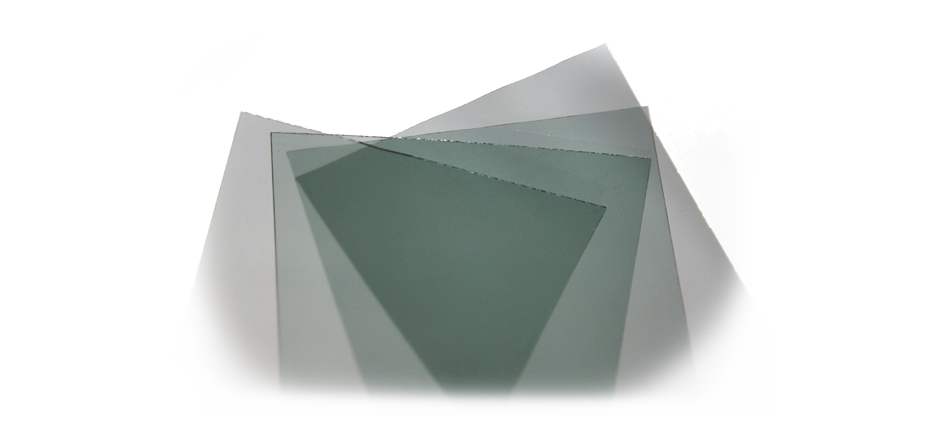
  • Adhesive or Non-Adhesive Backed Linear Polarizers
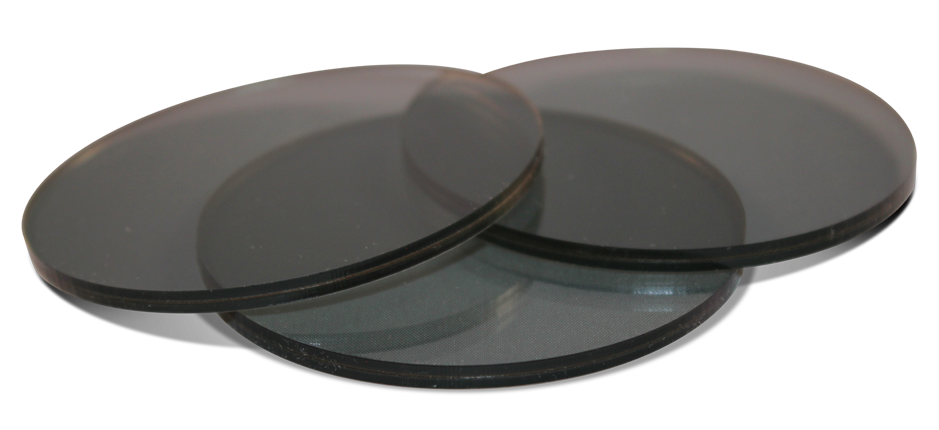
  • Laminating Capabilities to Acrylic or Glass
  • Numerous Transmissions Available
  • Wide Range of Thicknesses
  • Laser Cutting Services for Your Specific Requirements
  • Replacements for Polaroid and 3M HN32, HN38, HN42 & HN42HE
Order Online

Uses:

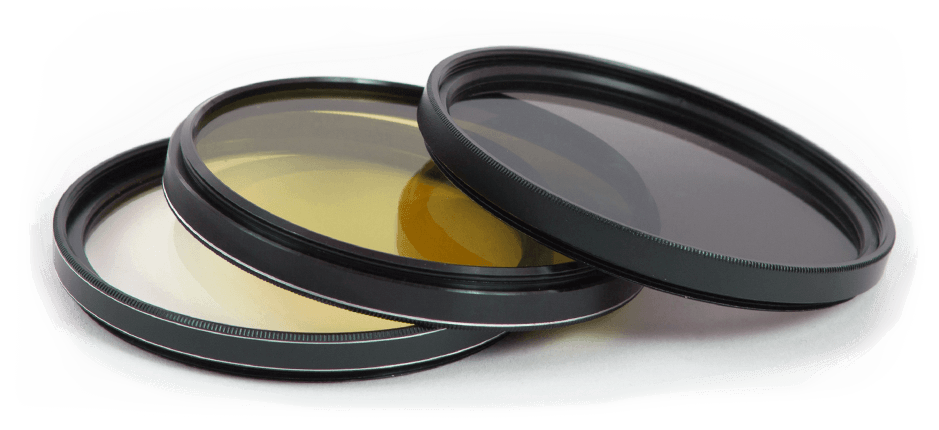
Linear polarizers are used in a wide variety of applications. A linear polarizer is an excellent solution in applications that require glare reduction due to reflected light. Camera filters, sunglasses, machine vision systems greatly benefit from the use of a linear polarizer.

A linear polarizer can also be used to modulate the intensity of a light source. By placing two polarizers over top of each other and rotating one against the other, one can control the brightness. Aircraft cabin windows and telescope filters are ideal applications.

Photoelastic stress analysis benefits from the use of a polarizer. A polariscope can employ either a linear or circular polarizer. Transparent plastics become birefringent (double refracting) when stressed somewhat like a wave retarder. A linear or circular polarizer allows the viewer to visually see the stress patterns as evidenced by dark or isochromatic fringes.

Linear polarizers (and circular polarizes) are also used in passive 3D applications. API offers linear and circular polarized glasses and projection filters.

American Polarizers also manufactures a multi axis linear polarizer for animation (Polarmotion) and sunglass demonstration applications. We have the ability to print a polarizer by selectively placing more than one axis on a sheet. By combining the multi axis polarizer with a spinning linear polarizer, motion is simulated. We also create cards that do not show any picture until polarized sunglasses are worn.

How does a linear polarizer work?

A linear polarizer transmits light uniformly vibrating in a single plane while absorbing the orthaganol plane. We usually describe a single plane or beam of polarized light in terms of what we call the pattern of vibration. If the vibrations are in one direction, the light is linearly polarized (See Figure 1).

Linear Polarizer Figure 1

There are two axes: transmitting and absorbing. The transmitting axis is normally referred to as the “polarizing axis.” Light passing through a single polarizer loses at least 50% transmission, depending upon the grade of polarizer used (transmission specifications) and the polarization requirements.

Crossing the two linear polarizer axes at 90 degrees to one another can produce near absolute blockage of light or cancellation (See Figure 2). This is called extinction. The ratio of the transmission of two polarizers with axes parallel to axes crossed known as the efficiency of the polarizer. Note that raising transmission does not always result in higher efficiency due to resultant increases in extinction transmission.

Linear Polarizer Figure 2

Methods of producing Linear Polarized Light:

There are numerous ways of developing linearly polarized light. There are three widely known mechanisms:

  1. Double refraction or birefringence
  2. Reflection
  3. Dichroism

A brief description of these methods is listed below.

Double Refraction or Birefringent Polarizers

There are natural crystals, such as calcite and quartz, that divide a single beam of unpolarized light into two separate polarized beams of equal intensity. By splitting the two polarized beams, it is possible to make a very efficient linear polarizer.

Reflection Polarizers

If a single beam of unpolarized light strikes a flat, smooth, non-metallic surface at an angle, the reflected beam (S) will be partially or completely linearly polarized. The degree of polarization depends upon angle of incidence and the refraction index of the reflecting surface. The angle at which the degree of polarization is 100% is defined as the polarizing or Brewster’s angle.

Dichroic Absorptive Polarizers

API’s and most commercially produced polarizers are dichroic polarizers. They exhibit dichroism; the property of absorbing light that is polarized in a particular direction. A dichroic linear polarizer can be considered as having an indicated absorption and transmission axis. The transmission axis is also referred to as the “polarizing axis.” Stretched Polyvinyl Alcohol (PVA) is most commonly used in dichroic polarizers.

  • Plastic Film Linear Polarizer Product List
  • Acrylic Linear Polarizer Product List
  • Glass Linear Polarizer Options
  • Linear Polarizer Display Filters
American Polarizers, Inc.
141 South Seventh Street
Reading, Pennsylvania 19602 USA
Toll Free: 800-736-9031
Phone: 610-373-5177
Fax: 610-373-2229
E-mail: sales@apioptics.com
Copyright © 2008 American Polarizers, Inc. All rights reserved.
  • Sitemap